Guidebook for pre-med application
What is pre-med?
Pre-med, short for pre-medical, is not a major. It is a pathway, so the full term is the pre-med track. Some schools call it pre-health, but they refer to essentially the same thing. What does a pre-med program provide? You can think of a pre-med program as a startup incubator. An incubator provides a variety of resources to help startups get through their early stages. A pre-med program works the same way—it is a one-stop support system for students preparing to apply to medical school. It offers a wide range of resources related to the medical school application process, such as MCAT prep materials and study groups, hospital internship opportunities, and assistance with obtaining letters of recommendation. Students on the pre-med track generally have a much easier time applying to medical school than those who are not in the program. If a university has a strong pre-med program, students have access to more resources to help them plan for and successfully carry out their medical school preparation. For example, Johns Hopkins University's pre-health program provides students with extensive support and resources for summer programs, study abroad, hospital internships, research, volunteer and community service, course planning, and preparation for the MCAT and DAT.
Which Majors Require a Pre-Med Background?
Medicine is a broad field, but the degrees offered by medical schools are actually quite straightforward: essentially just the MD and the PhD. Medical school itself isn't divided by specialty means an MD covers clinical medicine across all areas. While a PhD focuses on medical research. PhD holders work primarily in research settings: they don't really see patients or perform surgeries.
When it comes to admissions, MD programs strongly prefer applicants with a pre-med background. PhD programs, on the other hand, care more about research experience and usually don't require pre-med at all.
It's also worth knowing that many healthcare careers don't require a medical degree. You can enter them directly with a bachelor's degree. Programs like radiation therapy, nursing, and pharmaceutical sciences are good examples. Since these paths don't go through medical school, you don’t have to follow a pre-med track as an undergrad either.
Which Undergraduate Major Gives You the Best Shot at Medical School?
On the surface, medical schools don't require a specific undergraduate major. You can study anything you want, whether that's biology, engineering, or something else entirely. As long as you meet the prerequisites, you're eligible to apply.
For example, Johns Hopkins University's pre-health program states clearly that there is no single set of classes required. Instead, they offer general guidelines for completing pre-med coursework:
· 2 courses in general (inorganic) chemistry with labs
· 2 courses in organic chemistry with labs
· 2 courses in biology with labs
· 1 course in biochemistry
· 2 courses in general physics with labs
· 1 course in mathematics and 1 course in statistics
· 2 courses focused on English and writing
· 2 courses in social and behavioral sciences, such as Introduction to Psychology and Introduction to Sociology
So while JHU doesn't tell you what to major in, they do expect you to complete all of these courses before applying to medical school. That means even if you're a philosophy major, you still need to check every box on this list.
This is exactly why certain majors tend to be more helpful for aspiring medical students. Biology, chemistry, and biochemistry naturally cover most of these requirements as part of the regular coursework. Neuroscience is another strong option for the same reason.
What to Look for When Choosing a College for Pre-Med
There are a few things to keep in mind when choosing the right school if you are planning to go pre-med.
First, look at the school's strengths in subjects like biology, chemistry, biochemistry, and neuroscience. These are the fields most closely tied to medical school preparation, so you want a school that takes them seriously.
Second, check whether the school has a strong pre-med track. Some schools have well-developed advising, resources, and course pathways specifically designed to support pre-med students, and that kind of infrastructure can make a real difference.
Third, pay attention to the school's policies around changing majors, minors, and double majors. For example, at NYU, your second major must be within the College of Arts and Science. If you're already in that college, you won't be able to double major with a program from a different school within the university. These rules vary a lot from school to school and can affect how much flexibility your child has.
Finally, find out whether the school grades on a curve. GPA is extremely important when applying to medical school, and some schools are known for grading more harshly than others. A school that deflates grades can put pre-med students at a real disadvantage, so this is worth researching before making a decision.
How to Plan Extracurriculars in High School for Pre-Med
For students interested in medicine, extracurriculars should reflect a genuine spirit of service, real exposure to healthcare settings, and a clear sense of purpose behind pursuing this path.
On-campus activities
- Clubs related to medicine, such as HOSA (Future Health Professionals). This is a national student organization supported by the U.S. Department of Education and the Department of Health and Human Services, with chapters in high schools across the country. There are activities at the local chapter level as well as national competitions and events. To join, you should first check if their school has a HOSA chapter. If not, you can start one yourself. HOSA's official website has plenty of resources, including contacts for your state chapter.
- Biology clubs, such as USABO, which allows students to compete as a school team in the USA Biolympiad.
- Chemistry related clubs.
- Science research clubs.
Outside of school
- Volunteering or internships at hospitals, the Red Cross, or similar organizations.
- Competitions related to biology, chemistry, or biochemistry.
- Research opportunities through universities or hospitals.
- A passion project, meaning an independent project your child develops and pursues on their own.
- Summer programs focused on biochemistry or medicine.
Pre-Med Application Case Study
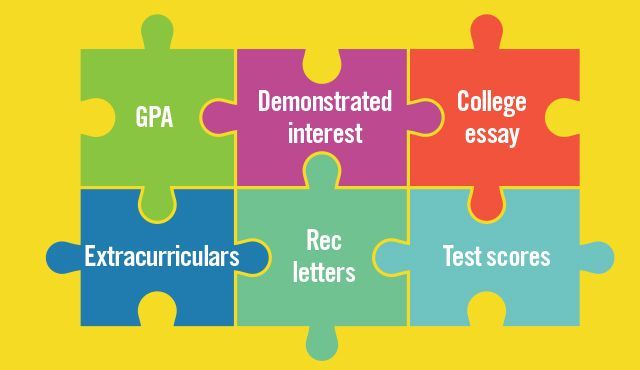
This is the profile of one of our pre-med students. By the time she submitted her college applications, she had built an exceptionally strong portfolio of activities that were strategically aligned with her goal of pursuing a career in medicine. Her experiences included multiple hospital internships, extensive clinical volunteering, physician shadowing, and other healthcare-related activities. If your goal is to gain admission to a top university as a pre-med student, it's important to begin building a similarly focused profile early in high school. Admissions officers look for sustained commitment, meaningful experiences, and a clear passion for medicine—not just strong grades and test scores.
- American Red Cross CPR and AED certification
- Top rankings at HOSA, both nationally and internationally
- National Biology Competition, ranked in the top 1 percent
- Silver medal at the British Biology Olympiad
- Research experience at multiple research institutions
- Multiple community service experiences