How to Get a Strong Letter of Recommendation
Most colleges require two to three letters of recommendation, typically including one from a school counselor and one or two from teachers. The purpose of a recommendation letter is to provide a third-party evaluation of the applicant. Simply put, the recommender is speaking on your behalf and advocating for your admission.
As a student, you generally do not have access to your recommendation letters, which introduces an element of uncertainty into the application process. While you cannot read the letters themselves, you can still influence and guide how they are written by choosing the right recommenders and providing them with helpful information about your background and accomplishments.
Counselor Recommendation vs. Teacher Recommendation
A counselor recommendation provides colleges with a broader view of your overall performance throughout high school. Since every high school differs in academic rigor, student demographics, and course offerings, the same GPA may represent very different levels of achievement at different schools. Admissions officers rely on counselor recommendations to better understand the context of your high school and to evaluate your academic record more accurately. This helps them gain a clearer picture of your true academic abilities and accomplishments.
Teacher recommendations, on the other hand, focus on your performance in a specific class. They provide detailed insight into your academic strengths, classroom engagement, intellectual curiosity, work ethic, and interactions with peers and teachers. These letters help admissions officers understand what kind of student you are in an actual learning environment.
Choosing Which Teachers to Ask for Recommendations
In most cases, you'll submit one counselor recommendation and two teacher recommendations. You don't get to choose your counselor, but you do get to choose your teachers, so how should you decide?
The first thing to consider is your intended major. Whenever possible, ask teachers whose subjects are related to what you plan to study. For example, if you're applying to computer science, a math teacher is a natural fit. For business or economics, an AP Economics or math teacher would be appropriate.
Beyond subject relevance, think about how well you performed in that class and, just as importantly, how well the teacher knows you. The goal is a recommendation that goes beyond generic praise, phrases like "this student works hard and gets along well with classmates" won't set you apart. What you want is a letter with specific examples that speak to your abilities and potential in a meaningful way.
The ideal situation is when all three factors align: you performed well in a subject directly related to your intended major, you have a strong relationship with the teacher, and the teacher knows you well enough to write with specific examples. But in many cases, the conditions aren't perfect. For instance, you may not have done as well in the course most directly tied to your major, or your relationship with that teacher may be limited. In that case, consider a teacher whose subject is indirectly related but would still fit. If you're applying to computer science and math is the most direct fit but your math performance is average, a physics teacher could work well instead. Similarly, if you're applying to biology but the biology teacher isn't the best option, a chemistry teacher is a reasonable alternative.
A few additional considerations: prioritize teachers from the past one to two years, and the more recent the grade level, the better. In terms of subjects, aim for one science and one humanities teacher. Very few colleges require more than two teacher recommendations, so one counselor letter and two teacher letters is sufficient for most applications. In special cases, for example, if a student has a strong athletic or musical background, an additional letter from a coach or music instructor can be a meaningful supplement.
How Important Are Recommendation Letters?
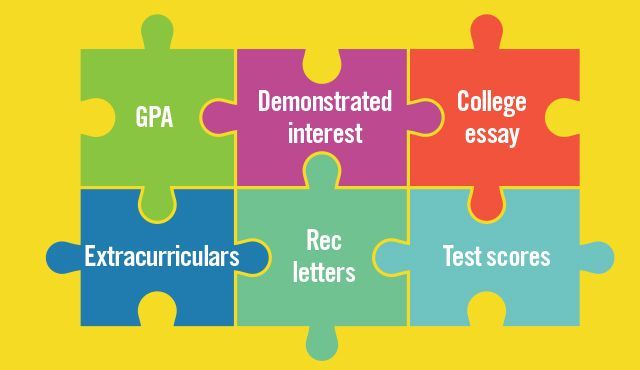
Recommendation letters rank just below transcripts, essays, and extracurriculars in the overall application. As a rough breakdown: grades account for about 30%, extracurriculars around 25%, essays around 25%, and recommendation letters around 15%.
That said, recommendations play a unique role — they are the only part of the application that isn't self-promotion. Because they represent a third party's assessment of the applicant, admissions officers take them seriously, particularly the counselor recommendation. A counselor letter can provide context that a transcript alone cannot. Grades tell one part of the story, but your teachers and counselor can speak to who you are as a student in a fuller sense.
Which Schools Value Recommendation Letters Most?
Recommendations carry more weight at private universities and schools that use holistic review. Smaller schools receive fewer applications and naturally have more time to read each letter carefully. At larger schools, admissions officers spend less time per application and may only read the counselor letter, or plus one teacher letter. Some large public universities — the University of California system, for example — don't require recommendation letters at all.
What Makes a Recommendation Letter Actually Help Your Application?
A strong recommendation letter does more than confirm that you're a capable student. If you're applying to top schools, admissions officers aren't just looking for evidence of good grades — they want to understand who you are as a person. What sets you apart beyond academic performance? What kind of character do you bring to a classroom, a team, or a community? These are the kinds of questions a well-written recommendation can help answer.
It's also worth keeping in mind that the vast majority of recommendation letters are positive. In all my years as an admissions officer, I rarely came across a negative one. That means a letter that's simply favorable but vague won't do much to help you. What makes a letter stand out is specificity: concrete examples, memorable details, moments that illustrate who you are in a way that numbers and résumés can't.
How to Get a Strong Recommendation Letter
One thing to keep in mind: counselors are busy, and at larger public schools especially, your counselor may not remember every student clearly. That's why building a genuine relationship with your counselor early on matters.
When it comes to teachers, start by scheduling a brief meeting to ask whether they'd be willing to write you a recommendation. Once they agree, ask what materials they need. Some teachers have their own cheat sheets and they'll ask you to fill in details like your intended major, the schools you're applying to, and application deadlines, and then send it back to them. If a teacher doesn't have a form, you should prepare one yourself. For our own students, we have a template we help them complete before sending it to their teacher.
The key is to be specific: let the teacher know which qualities you'd like highlighted and provide concrete examples to support each one. This makes it much easier for the teacher to write a strong, detailed letter. Teachers are busy too — they can't be expected to remember every moment from every student. If you hand them ready-to-use information, you're making their job easier and significantly improving the quality of what they write.